CEO's Column
How to Travel Comfortably in Japan
Book Your Hotel in Japan with Agoda

-
Tokyo Travel Tips | Why Are There So Many Potted Plants Outside Homes in Tokyo’s Old Neighborhoods?
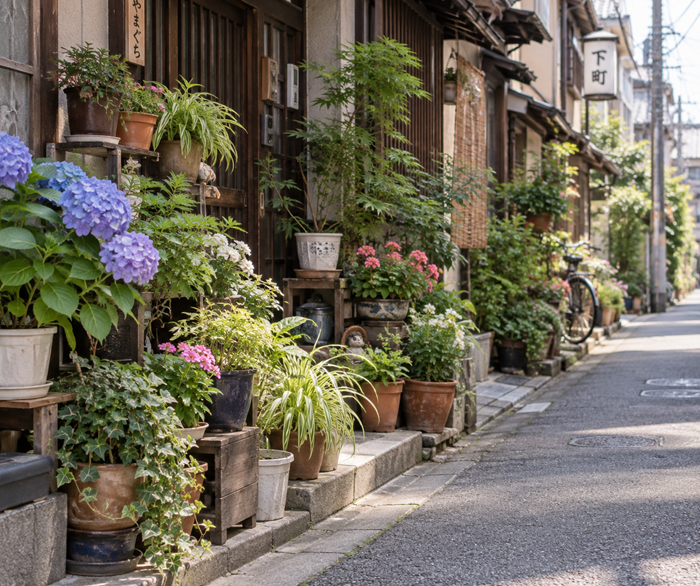
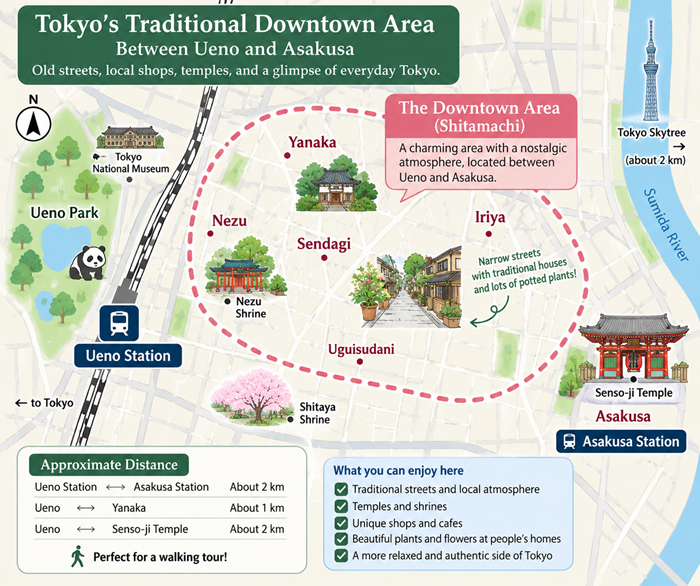
Walk through Tokyo’s older neighborhoods—Yanaka, Nezu, Sendagi, Asakusa, or Mukojima—and you may notice something curious.Potted plants are everywhere.
Hydrangeas, morning glories, camellias, small trees, succulents, and countless plants you may not even recognize crowd the tiny spaces in front of people’s homes. Sometimes there are so many pots that you wonder how anyone gets through the front door.
Why do people in Tokyo’s old neighborhoods love potted plants so much?
The answer may go all the way back to the Edo period (1603–1868).
Edo Was a City of Gardening Lovers
We tend to imagine gardening as something for people with large houses and spacious gardens. But Edo—the old name for Tokyo—had an extraordinarily rich gardening culture.Morning glories, chrysanthemums, Japanese primroses, irises, bonsai, and many other plants became extremely popular. New varieties were developed, plant markets flourished, and ordinary people enjoyed growing flowers at home.And surprisingly, samurai played a part in this story.
Some Samurai Grew Plants to Make Extra Money
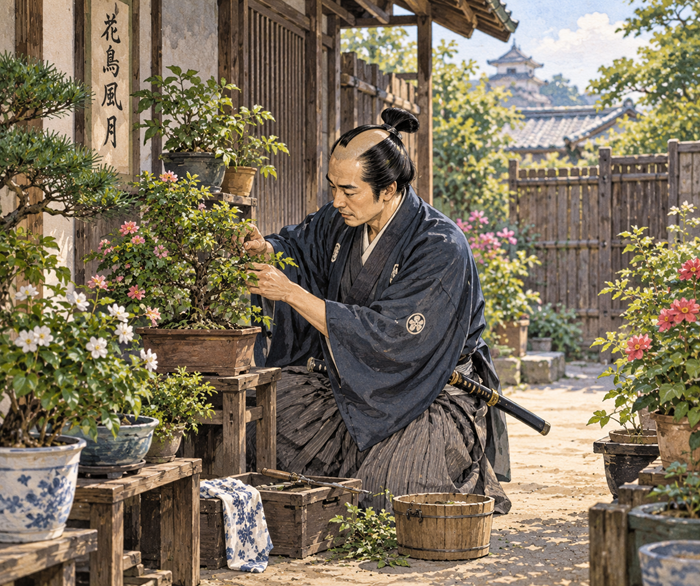
Not every samurai lived a wealthy life.Lower-ranking samurai often struggled financially and took on side jobs to supplement their income. They made umbrellas and handicrafts, raised goldfish—and some grew plants.One fascinating example can be found around present-day Okachimachi in Tokyo. Some lower-ranking samurai living in the area cultivated morning glories, including unusual varieties known as henka asagao, or “mutant morning glories,” and sold them for extra income.In other words, growing beautiful flowers could be both a hobby and a small business.
No Garden? No Problem.
The gardening craze eventually spread far beyond the samurai class.Edo was a densely populated city, and many ordinary people lived in nagaya—small wooden row houses. Most families had no private garden.But you didn’t need a garden to grow a plant.
All you needed was a pot.
People began placing pots in the narrow spaces outside their homes and along shared alleys. A tiny collection of plants could transform a cramped entrance into a miniature garden.There was another benefit, too. Plants created a soft boundary between private homes and public alleyways. Unlike a wall or fence, they also encouraged interaction with neighbors.
“Your morning glory is blooming beautifully.”
“That plant has really grown!”
A few pots of flowers could become part of everyday neighborhood communication.
The Birthplace of Someiyoshino Cherry Trees
Tokyo’s passion for gardening can also be seen in the history of one of Japan’s most famous trees.During the Edo period, the Somei area, around present-day Komagome, became famous for its professional gardeners and nurseries. They cultivated and sold many varieties of flowers and trees.The area is closely associated with the development and spread of the Someiyoshino—the cherry tree that now produces the pale pink blossoms seen across Japan every spring.Gardening was not simply a pastime in Edo. It was a genuine urban industry and an important part of city life.
Tokyo’s Smallest Gardens
Of course, it would be too simple to say that today’s potted plants exist only because samurai once grew flowers.Tokyo’s gardening culture developed through many different influences: samurai horticulture and side businesses, professional nurseries, plant markets, the gardening enthusiasm of ordinary citizens, and the simple reality of living in houses without gardens. But together, these traditions created something that has survived remarkably well.So next time you explore an old Tokyo neighborhood, take a closer look at the entrances to people’s homes.That chaotic collection of flowerpots may look like nothing more than someone’s gardening hobby.But it is also part of a way of living that Tokyo has carried forward from the days of Edo.Even without a garden, a single flowerpot can create a little piece of nature.Perhaps those tiny spaces outside Tokyo homes are the smallest gardens in the world. -
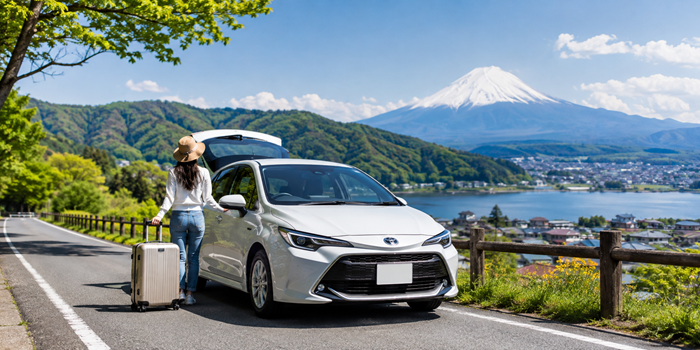
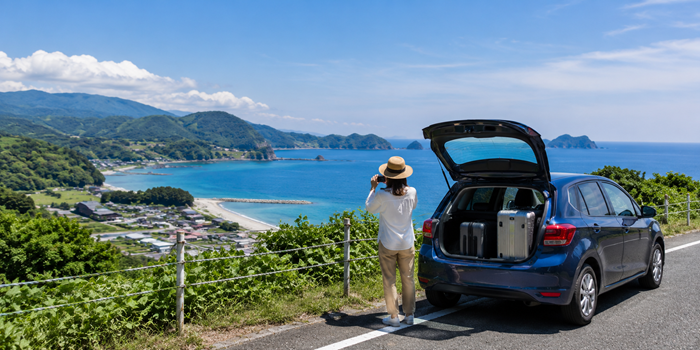
Traveling Through Rural Japan? Renting a Car Is a Great Option
Every year, millions of international travelers visit Japan’s famous cities such as Tokyo, Kyoto, and Osaka. But Japan has much more to offer beyond its major cities.
Travel a little farther into the countryside, and you’ll discover countless beautiful places that still receive relatively few international visitors. Small villages surrounded by mountains, stunning coastlines, quiet roads running through rice fields, historic townscapes, and peaceful hot spring towns — there are many places that even Japanese travelers are surprised to discover.However, there is one major challenge when traveling through rural Japan: transportation.
In large cities like Tokyo, you usually only have to wait a few minutes for the next train. In rural areas, however, trains may run only once an hour, while some buses operate just a few times a day. In some cases, tourist attractions are located several kilometers away from the nearest station.That’s why many Japanese people choose to rent a car when traveling in the countryside.
For example, they might travel from Tokyo to a major regional city by Shinkansen (bullet train) or airplane, rent a car at the station or airport, and then drive to hot spring resorts, mountain villages, coastal areas, and other destinations.
The biggest advantage of renting a car is freedom.
You don’t have to worry about train or bus schedules. If you see a beautiful landscape, you can stop and enjoy it. If you discover an interesting local restaurant or shop along the way, you can simply pull over and take a look.Another big advantage is luggage. Instead of carrying a heavy suitcase from one train or bus to another, you can simply put it in the trunk.
Rental prices vary depending on the type of car, location, and season, but a small car can sometimes be rented for around ¥10,000 per day. If you are traveling with two to four people, renting a car can also be a convenient and efficient way to explore the countryside.
However, there is one very important thing international travelers should remember:In Japan, cars drive on the left side of the road.
If you come from a country where people drive on the right, you should be especially careful when turning at intersections or entering a road from a parking lot.Roads in rural Japan can also be very different from what you may be used to. Some roads are extremely narrow, and mountain roads may have many sharp curves. There is no need to rush. You are on vacation, after all. Take your time, stay alert, and always drive safely.
With a rental car, you can discover a side of Japan that is difficult to experience by train or bus alone — small villages, hidden hot springs, quiet mountains, beautiful coastlines, and everyday landscapes far away from the major tourist destinations.So, on your next trip to Japan, why not leave the famous sightseeing spots behind for a while, rent a car, and explore the Japanese countryside?
You may discover a completely different side of Japan. -
Which Rental Car Companies Offer Multilingual Support in Japan?
There are many rental car companies in Japan, but for international travelers, we recommend choosing a major rental car company that provides good multilingual support.
One of the most convenient options is TOYOTA Rent a Car.
TOYOTA Rent a Car has locations throughout Japan, including many major airports and Shinkansen (bullet train) stations. Its official website is available in several languages, including English, Traditional Chinese, Korean, and Thai.
Another advantage is the multilingual assistance available after you rent the car. TOYOTA Rent a Car provides support in English, Chinese, Korean, and Thai, with chat and web-based phone assistance available 24 hours a day, 365 days a year.
This can be especially reassuring if you have an accident, experience car trouble, or need assistance while driving in Japan for the first time.
Another good option is NIPPON Rent-A-Car.
NIPPON Rent-A-Car has around 500 locations throughout Japan, including branches near major airports and railway stations. It also provides communication support in English, Chinese, Korean, and Thai, as well as a 24-hour telephone interpretation service.
When choosing a rental car company in Japan, don’t look at the price alone.
It is also important to check whether you can get assistance in a language you understand if you have an accident or experience trouble during your trip.
You should also check the driving license requirements before making a reservation.
To drive legally in Japan, you will need a driving license that is valid in Japan, such as an International Driving Permit (IDP), depending on the country or region where your license was issued. In some cases, your regular driving license from your home country alone is not sufficient.
Be sure to check the requirements before booking your rental car so that you can enjoy a safe and stress-free road trip through Japan. -
Tokyo Travel Tips | What’s the Difference Between a Shrine and a Temple?
When traveling around Japan, you’ll see shrines and temples almost everywhere.Senso-ji in Asakusa, Kiyomizu-dera in Kyoto, Meiji Jingu, Fushimi Inari Taisha… They are all famous places that feel distinctly Japanese, but shrines and temples are actually very different things.
For Japanese people, the difference may seem obvious. But for international visitors, it’s perfectly natural to wonder, “They look similar—so what’s the difference?”
The easiest way to remember is:
Shrine = Shinto
Temple = Buddhism
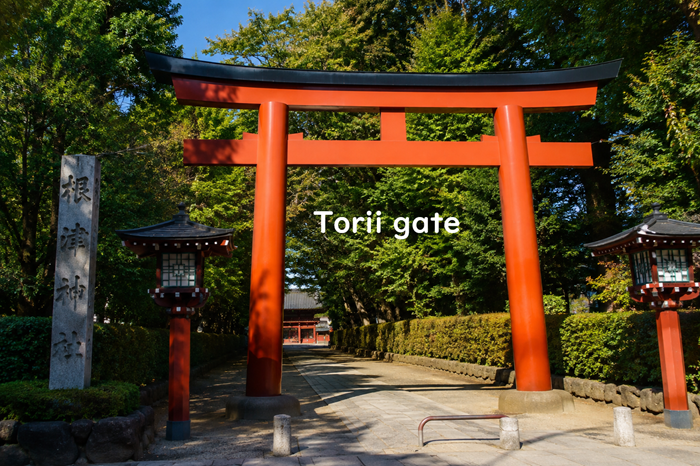
See a Torii Gate? It’s Probably a Shrine
The easiest way to identify a shrine is to look at the entrance.Most Shinto shrines have a torii gate. Many people picture the famous bright red or vermilion gates, but torii can also be made of wood, stone, or other materials.A torii marks the boundary between the everyday world and a sacred space where the kami reside. In other words, when you pass through a torii gate, you are symbolically entering a sacred place.Shrines belong to Shinto, Japan’s indigenous spiritual tradition, and are dedicated to kami.One fascinating aspect of Shinto is that there are countless kami. The Japanese expression “yaoyorozu no kami” literally suggests “eight million gods,” but the idea is really that kami can be found everywhere—in mountains, oceans, trees, rocks, natural phenomena, and many other aspects of the world around us.
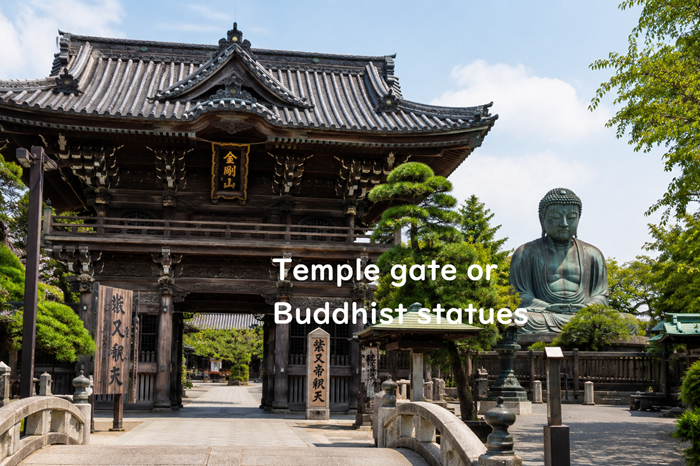
See Buddhist Statues or Graves? It’s Probably a Temple
Temples, on the other hand, belong to Buddhism.Buddhism is believed to have arrived in Japan around the 6th century, reaching the country through China and the Korean Peninsula.At a Buddhist temple, you may see statues of the Buddha, pagodas, large bells, incense burners, and other Buddhist objects. Many temples also have cemeteries within or near their grounds.Instead of a torii, temples often have a large entrance called a sanmon, or temple gate.For example, the famous Senso-ji in Asakusa, Tokyo, is a Buddhist temple. Its iconic Kaminarimon, or “Thunder Gate,” may look impressive and ceremonial, but it is not a torii gate.
The Way You Pray Is Different, Too
Shrines and temples also have different customs for prayer.At many Shinto shrines, the standard practice after making an offering is:
Two bows, two claps, one bow.
Bow twice, clap your hands twice, make your prayer, and then bow once more. At a Buddhist temple, however, you generally do not clap your hands.Instead, after making an offering, quietly put your hands together in front of your chest and pray.Of course, visitors are not expected to know every rule perfectly. But knowing this small difference can make visiting shrines and temples a much more meaningful cultural experience.
Do Japanese People Visit Both Shrines and Temples?
This may be the most surprising part for many international visitors.
Yes, they do.
Many Japanese people visit a Shinto shrine for Hatsumode, the first shrine or temple visit of the New Year, while funerals are often conducted according to Buddhist traditions. And many of those same people also celebrate Christmas!This may seem contradictory from the perspective of cultures where religious identity is more clearly defined.But in Japan, Shinto and Buddhism have coexisted for centuries, influencing each other and becoming deeply woven into everyday customs and traditions. For many Japanese people, visiting a shrine or temple is not necessarily about choosing one religion over another.
So, next time you’re walking around Japan, don’t just look at the buildings.
Look at the entrance.
See a torii gate? It’s a shrine.
See a temple gate or Buddhist statues? It’s probably a temple.
Remember this simple trick, and exploring Japan might become just a little more interesting. -
Tokyo Travel Tips: What Is “Otoshi”? Why Did I Get Food I Didn't Order?
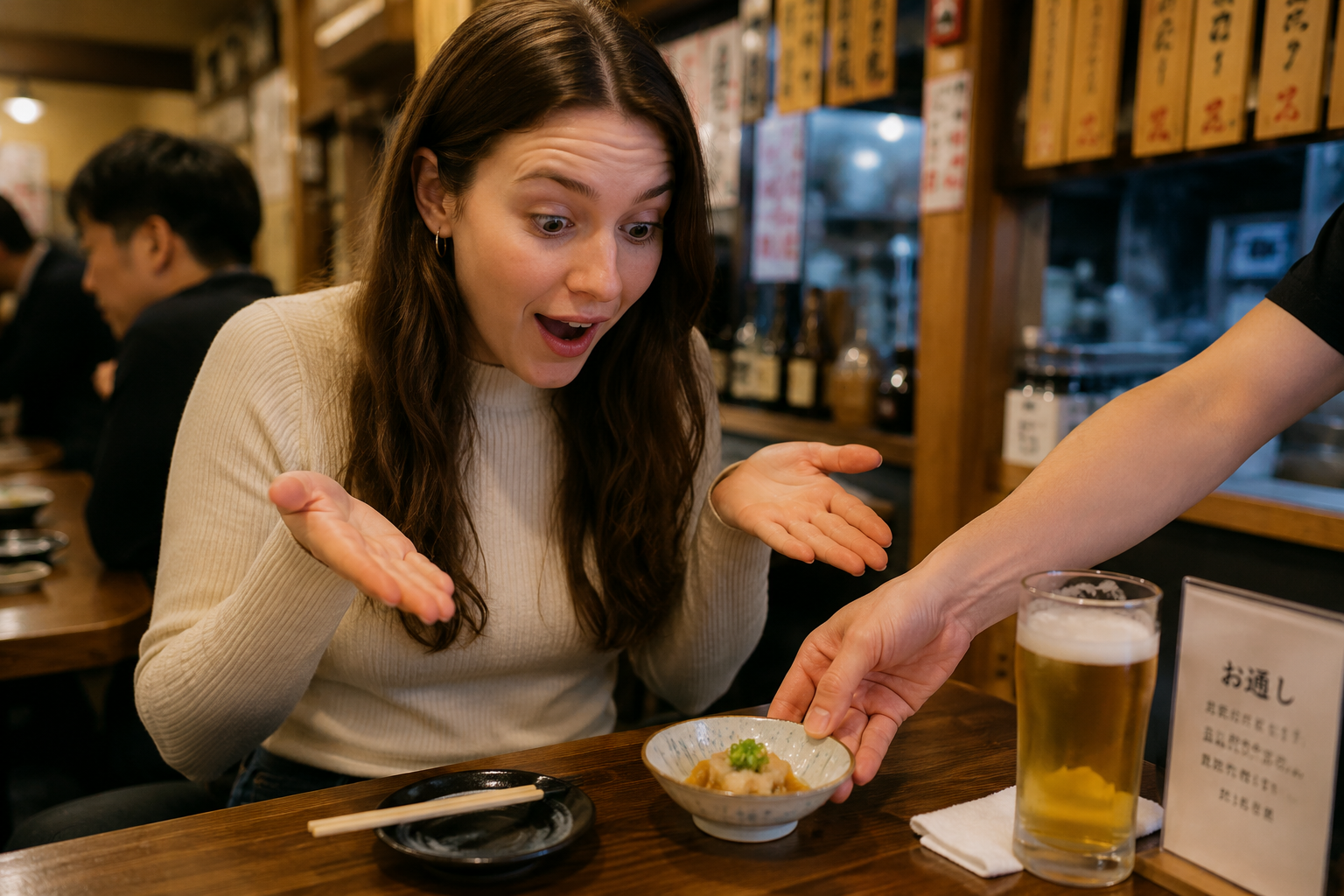
“I didn’t order this food… but it suddenly appeared on my table. And then I found it on the bill!”
If you visit a Japanese izakaya for the first time, this may come as a surprise.
“Why did they bring me something I didn’t order?”
“Isn’t this complimentary?”
“Am I being overcharged?”
Don’t worry. In most cases, it is something called “otoshi” (お通し) — a unique part of Japanese izakaya culture.
What Is “Otoshi”?
Otoshi is a small dish that is automatically served when you sit down at an izakaya. It usually arrives before the food you ordered, or together with your first drink.It could be edamame, tofu, pickles, simmered vegetables, fish, or a small seasonal dish. What you receive depends entirely on the restaurant.
Here is the important point:
Even though you didn’t order it, otoshi usually isn’t free.
The price varies from place to place, but it is generally a few hundred yen per person.The easiest way to understand it is to think of otoshi as a combination of a small appetizer and a table charge.
Why Do They Serve Food I Didn’t Order?
Imagine sitting down at an izakaya and ordering a beer.Your beer may arrive quickly, but the dishes you ordered could take a little longer to prepare.That’s where otoshi comes in.It gives you something small to eat while enjoying your first drink and waiting for the rest of your food.But otoshi can be more than just a snack.Sometimes it gives you your first impression of the restaurant’s cooking.At large chain izakayas, the otoshi may be something simple. But at a small local izakaya or a restaurant that takes pride in its food, you might receive a surprisingly elaborate dish made with seasonal ingredients.
You may even find yourself thinking:
“Wow… this is just the otoshi?”
In that sense, otoshi can be seen as the restaurant’s first dish to welcome you.
Can I Say, “No Otoshi, Please”?
This is where things get a little complicated. Some izakayas may allow you to refuse the otoshi if you tell the staff that you don’t want it.However, at other restaurants, the otoshi charge essentially functions as a table charge. In that case, you may still be charged even if you don’t eat the dish.So don’t assume that “I didn’t eat it” means “I don’t have to pay for it.”If you are concerned about extra charges, you can ask before sitting down:“Is there a table charge or otoshi charge?”Also, if you have food allergies or dietary restrictions, don’t eat the otoshi without checking what is in it. Ask the staff first.
Don’t Be Surprised When You Get the Bill!
In many countries, being charged for something you never ordered would be very unusual.That’s why some international visitors are confused — or even upset — when they see an otoshi charge on their bill.But once you understand the system, it becomes another interesting part of experiencing a Japanese izakaya.
Instead of wondering,
“Why did they bring me this?”
you might start wondering,
“What will today’s otoshi be?”
That little surprise at the beginning of your meal can be part of the fun.
Tokyo Travel Tip
If a small dish suddenly appears at your table in a Japanese izakaya, don’t immediately assume it’s complimentary.
It might be otoshi.
Rather than thinking of it simply as a mysterious extra charge, try seeing it as a small introduction to Japanese izakaya culture.After all, discovering customs you don’t have back home is one of the most interesting parts of traveling in Japan! -
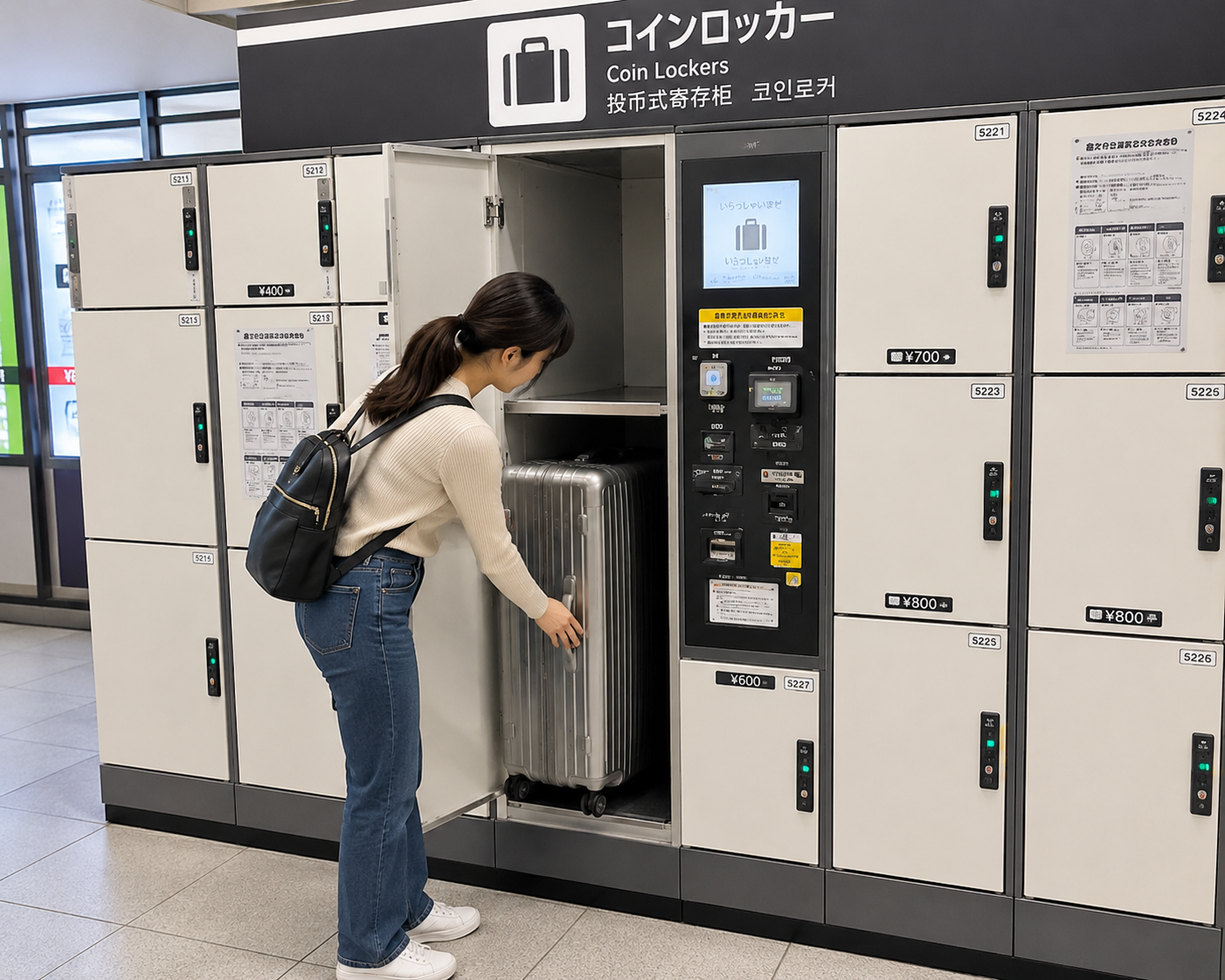
Tokyo Travel Tips: Your Best Friend for Tokyo Sightseeing: How to Use Station Coin Lockers
When traveling around Tokyo, one thing that can be surprisingly inconvenient is carrying large luggage. After checking out of your hotel, you may find yourself wondering, “My flight isn’t until tonight—what should I do with this suitcase?” That’s when the coin lockers found at train stations can be extremely useful. Major stations such as Tokyo, Shinjuku, Shibuya, Ikebukuro, and Ueno have many coin lockers. Japanese people also frequently use them when traveling, shopping, or attending events.
What Sizes Are Available?
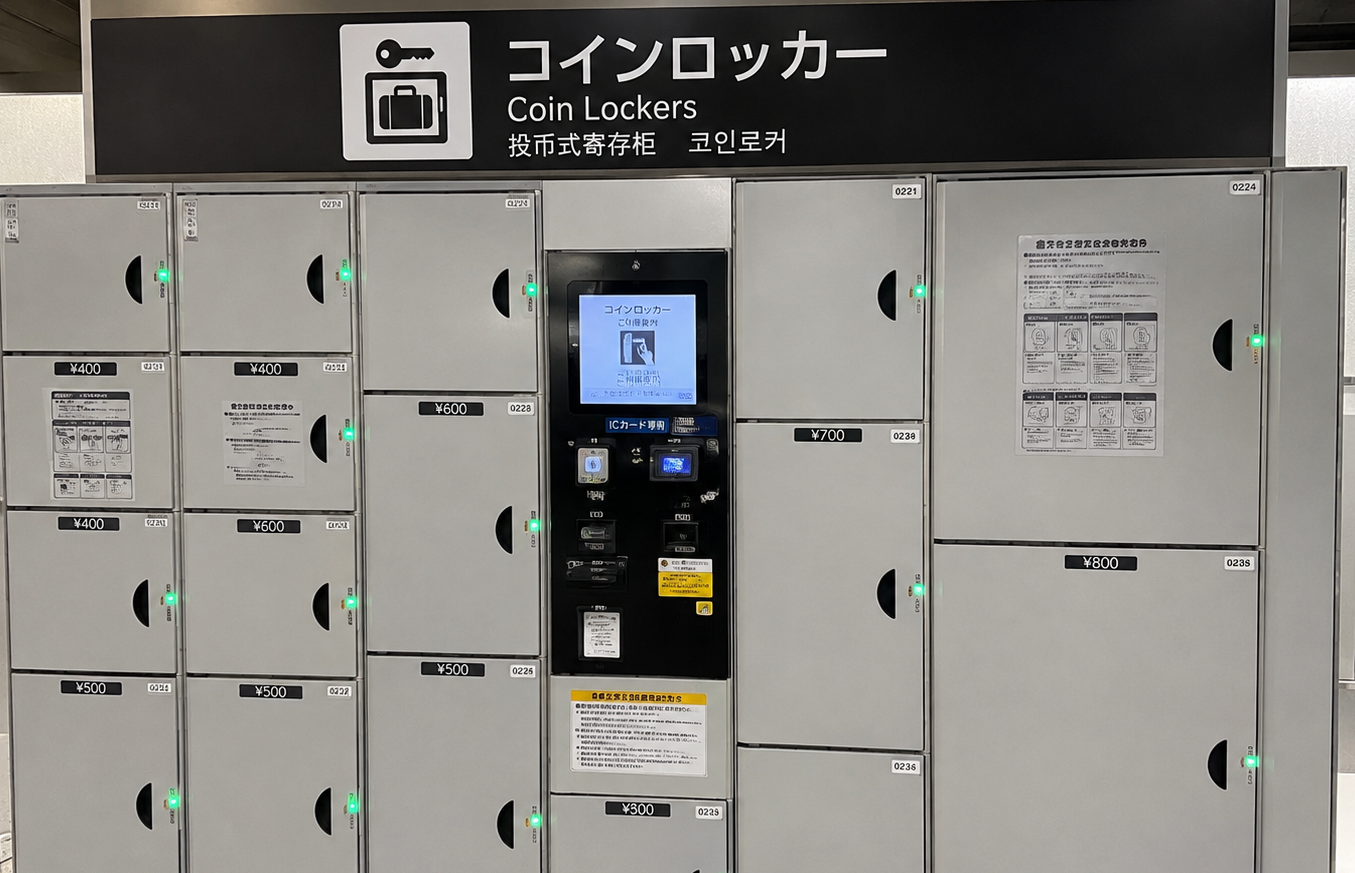
Station coin lockers come in several sizes, generally ranging from small and medium to large. Small lockers are convenient for backpacks, handbags, and shopping bags. Medium lockers can accommodate larger bags or small carry-on suitcases. For international travelers with suitcases, the two sizes worth paying particular attention to are Large and Extra Large.
Large
Height: 80–87 cm × Width: 36–40 cm × Depth: 57–68 cm
If you have a standard suitcase, try looking for a Large locker first. However, depending on the shape and thickness of your suitcase, it may not fit even if its overall size seems suitable.
Extra Large
Height: 110–117 cm × Width: 36–42 cm × Depth: 57–65 cm
Extra Large lockers are useful for travelers carrying bigger suitcases. However, not every station has Extra Large lockers, and even when they are available, there may only be a few of them. At busy stations such as Tokyo, Shinjuku, and Shibuya, Large and Extra Large lockers can all be occupied, especially on weekends and during peak travel seasons. Prices vary depending on the station, location, and locker size, but in Tokyo, you can generally expect to pay around ¥400–¥1,000.
Put Your Luggage in Before Operating the Locker
One thing that can confuse first-time users is when to put their luggage inside. Generally, you should first find an available locker, put your luggage inside, close the door, and then follow the instructions on the screen. While traditional lockers that accept ¥100 coins are still available, touch-screen lockers are becoming increasingly common at stations. Many accept transportation IC cards such as Suica and PASMO, making payment very convenient. Many machines also offer English-language instructions, so they are relatively easy to use even if you cannot read Japanese. With some lockers, if you pay using an IC card, the card itself becomes the “key” you use to open the locker later.
Try Changing the Direction of Your Suitcase
Even after finding a Large or Extra Large locker, you might think, “Wait—my suitcase doesn’t fit!” Don’t give up immediately. Sometimes simply changing the suitcase from vertical to horizontal, or adjusting the direction of the wheels, will make it fit. However, never force your suitcase inside or try to shut the door when it does not close properly. Your luggage could get caught in the door, potentially damaging the locker or your suitcase. It is also a good idea to keep important items such as your passport, wallet, smartphone, airline ticket, and medication with you rather than leaving them in a locker.
Most Important Tip: Take a Photo of the Locker Location! One of the most important things to remember when using a coin locker in Tokyo is not to forget where you left your luggage. Stations such as Tokyo and Shinjuku are enormous, and there may be many separate coin-locker areas within the same station. Simply remembering, “I left my suitcase in a locker at Tokyo Station,” may not be enough to find it later. After storing your luggage, take photos of the locker number, the entire locker area, the name of the nearby ticket gate, the exit number, and any nearby shops or signs. Doing this can make it much easier and less stressful to find your locker when you return. Also, operating hours, maximum storage periods, and additional charges for keeping luggage overnight vary by locker. Always check the instructions displayed on the locker you are using. Walking around Tokyo with a large suitcase is much more tiring than you might expect.
Leave your luggage in a coin locker, travel light, and enjoy exploring Tokyo! -
Tokyo Travel Tips: What You Should Know Before Staying at a Minpaku in Japan
When searching for accommodation in Japan, you may come across the word “Minpaku.”Minpaku refers to private accommodation where ordinary houses, apartments, or vacant homes are rented out to travelers.They can be cheaper than hotels, often come with kitchens and washing machines, and can be convenient for families or groups traveling together.
Sounds great, right?
But before choosing a Minpaku for your trip to Japan, there are a few things you should know.
What Exactly Is a “Minpaku”?
Simply put, a Minpaku is a private home or residential property used as short-term accommodation for travelers.One of the companies that helped popularize this style of travel around the world was Airbnb. It began in San Francisco in 2007, when its founders started hosting travelers in their own home, and the idea eventually spread around the world.In Japan, Minpaku accommodation began growing rapidly in the 2010s as the number of international visitors increased dramatically, particularly in cities such as Tokyo, Osaka, and Kyoto.But this rapid growth also created some unexpected problems.
When Tourist Accommodation and Everyday Japanese Life Share the Same Building
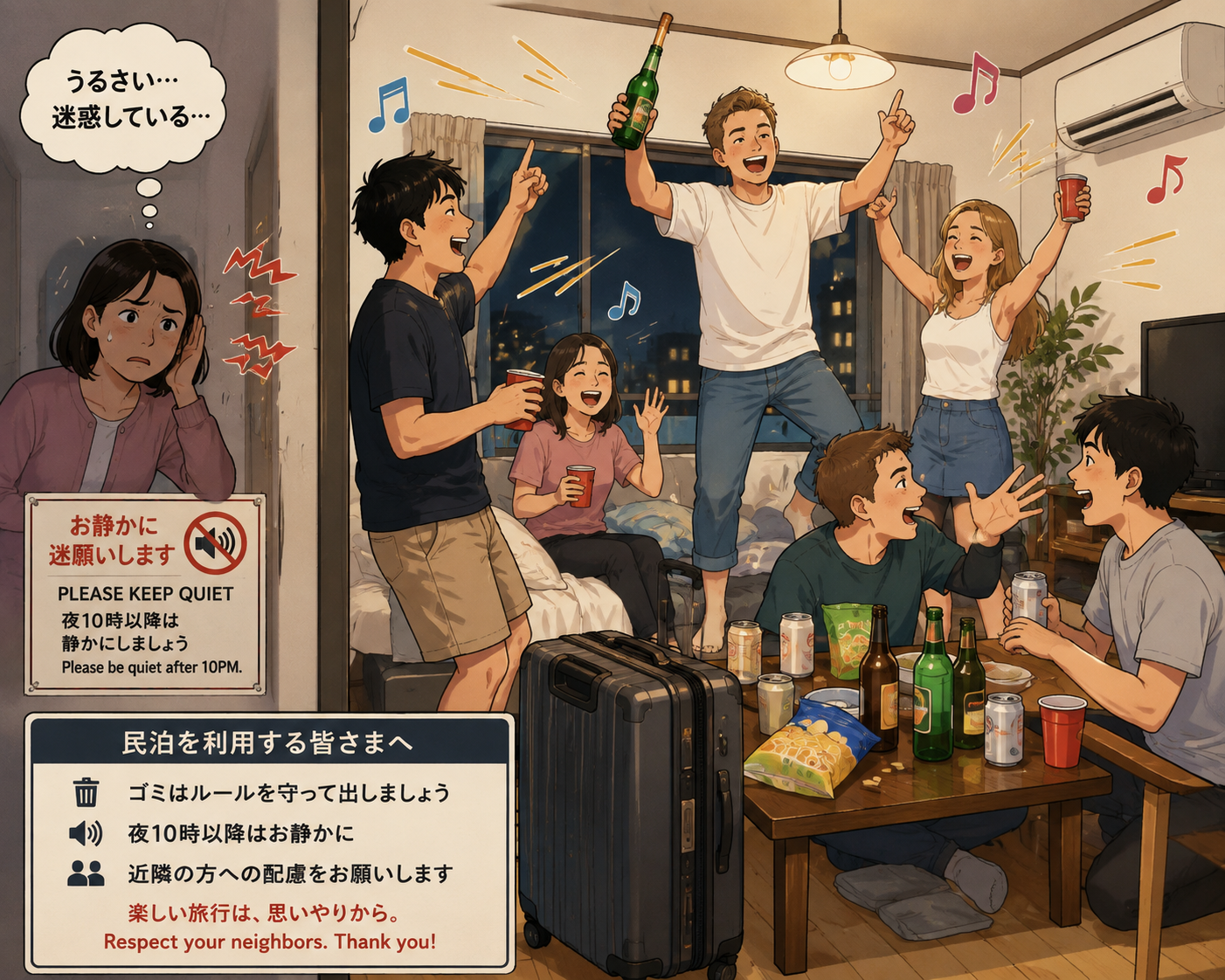
This is perhaps the biggest difference between a hotel and a Minpaku.A hotel is a building designed primarily for travelers.But a Minpaku may be located inside an ordinary apartment building or residential neighborhood where Japanese people are living their everyday lives.People wake up early for work. Families are raising young children. Elderly residents may have lived in the same neighborhood for decades.Then suddenly, travelers from all over the world begin arriving with suitcases.Naturally, differences in lifestyles and customs can sometimes cause problems.Two of the biggest issues are garbage and noise.
Japan’s Garbage Rules Can Be Surprisingly Complicated
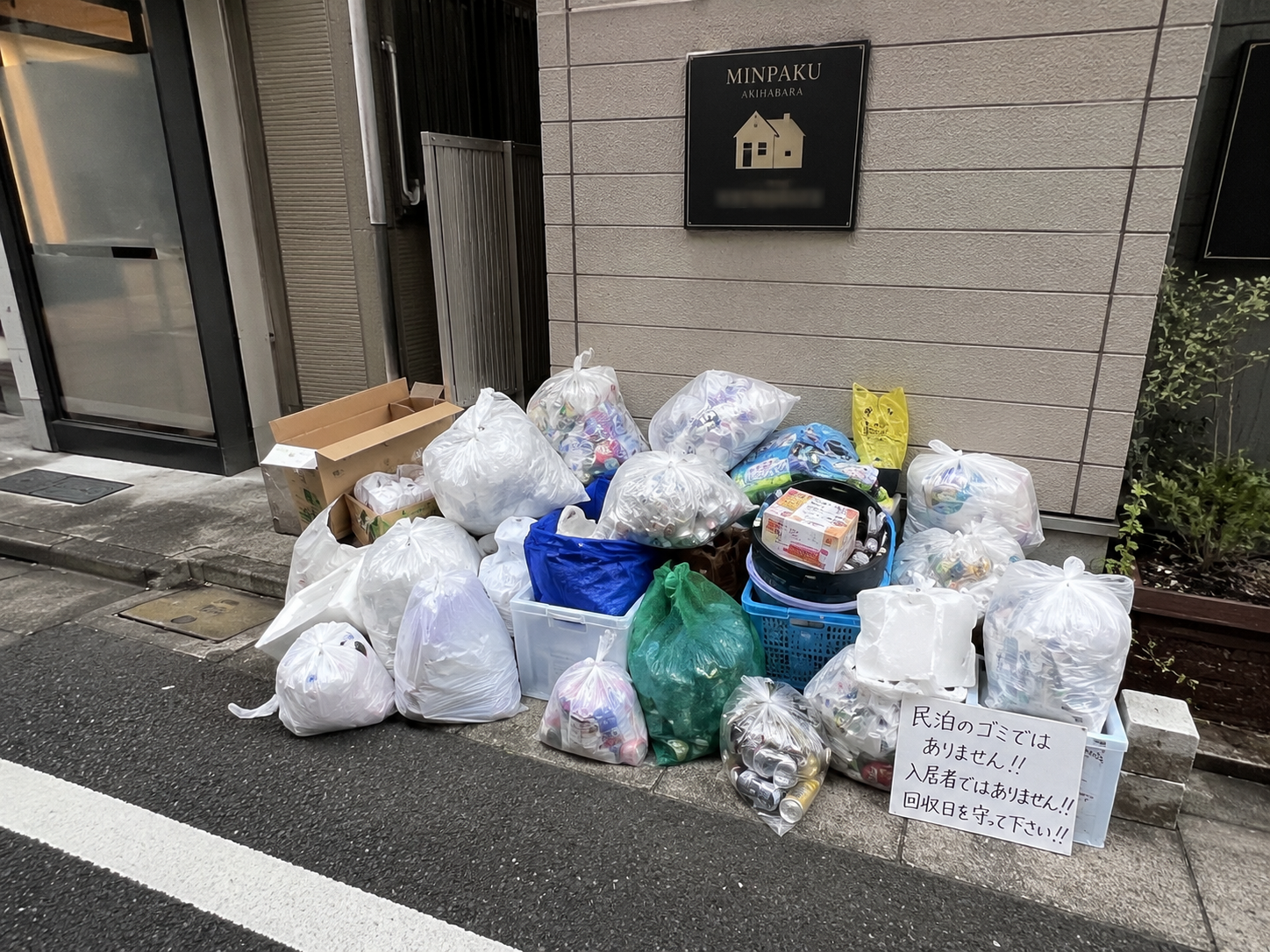
In Japan, you usually cannot simply throw away your garbage whenever you want. Depending on the neighborhood, there may be specific days for burnable garbage, bottles, cans, plastics, and other types of waste.
For example:“Burnable garbage: Tuesday.”“Bottles and cans: Friday.”The rules vary from one municipality to another.Travelers who do not know these rules may leave garbage outside on the wrong day or fail to separate it correctly.For a tourist staying only a few days, this may seem like a small mistake.But for local residents, somebody eventually has to deal with that garbage.
What About Noise?
Noise is another common source of friction.Talking loudly late at night, chatting in apartment hallways, rolling large suitcases through corridors, or having a few drinks with friends may seem completely normal while you are on vacation.But remember: the person living next door may have to wake up at 6:00 a.m. for work.Japan is generally a quiet country, particularly in residential areas at night.What feels like normal vacation behavior to a traveler can sometimes feel surprisingly loud to the people who actually live there.
Some Travelers Even Leave Their Suitcases Behind
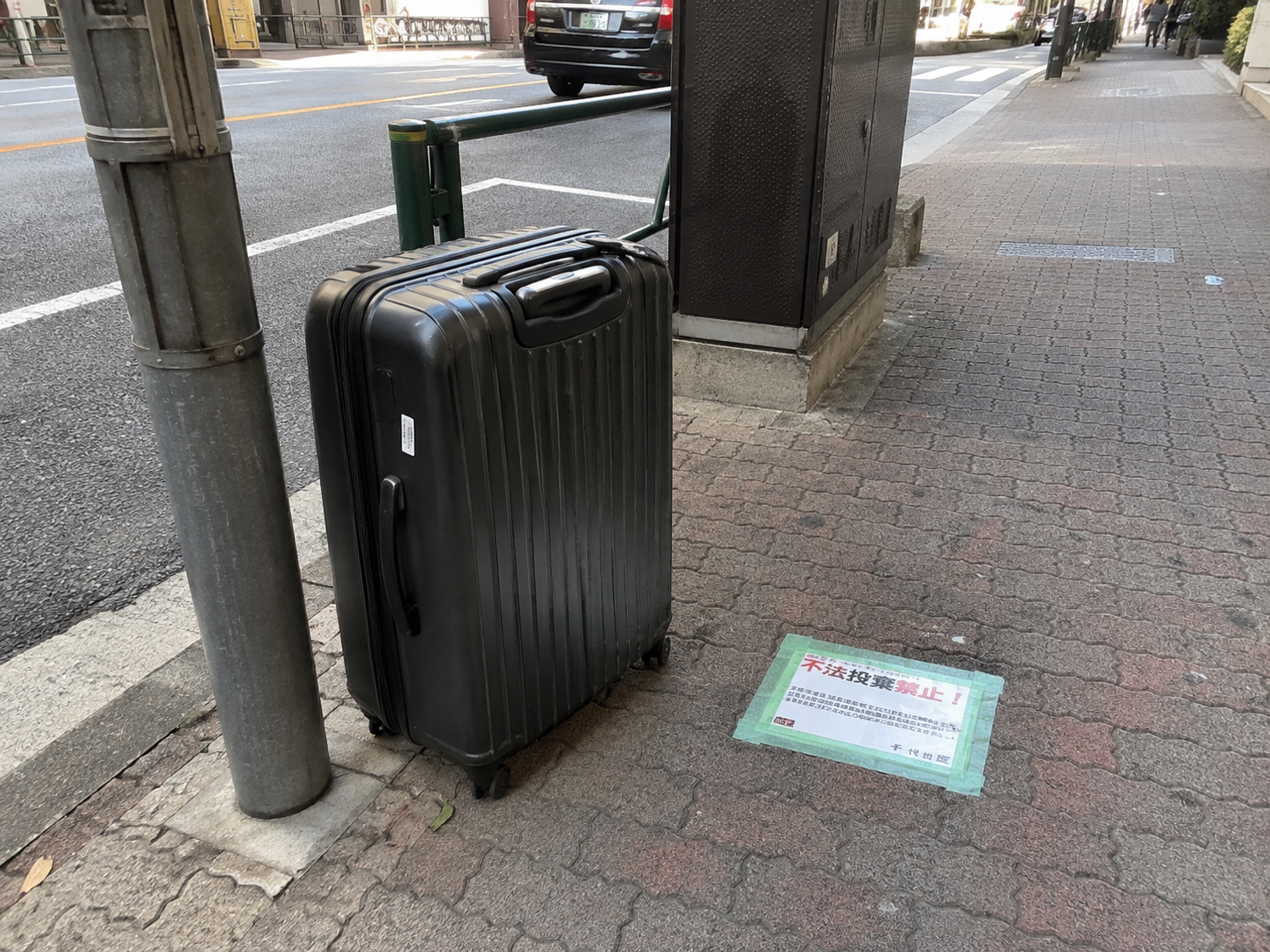
Another issue that has attracted attention in Japan is abandoned luggage.Large suitcases cannot always simply be thrown away with ordinary household garbage in Japan. Depending on the municipality, they may need to be disposed of as oversized waste, following specific procedures and sometimes requiring a disposal fee.However, there have been cases where travelers have left unwanted suitcases at accommodation facilities or abandoned them before returning home.From a traveler's point of view, it might seem simple:“I don’t need this anymore, so I’ll just leave it here.”But someone in Japan then has to arrange and sometimes pay for its disposal.
The Reality: Not Everyone Welcomes Minpaku
Of course, many Japanese people warmly welcome international visitors.And the vast majority of travelers staying in Minpaku properties behave responsibly and respect local rules.However, because of past problems involving garbage, noise, security, and other issues, some local residents are uncomfortable with Minpaku properties opening in their apartment buildings or neighborhoods.This does not necessarily mean that they dislike foreign tourists.The issue is more complicated than that.Imagine living in the same apartment building for many years and suddenly discovering that the apartment next door has effectively become a hotel room, with different people arriving every few days.For travelers, it is a vacation.For the people next door, it is their everyday life.Understanding this difference is very important.
For Your First Trip to Japan, a Hotel May Be Easier
Minpaku certainly has its advantages.Staying in a Japanese residential neighborhood, shopping at a local supermarket, visiting a neighborhood bathhouse, and experiencing daily life away from major tourist areas can be a wonderful way to discover Japan.But if you are unfamiliar with Japanese customs and local rules, a regular hotel or ryokan may be a more comfortable choice—especially on your first trip to Japan.Hotels have front-desk staff who can help when something goes wrong. You do not have to worry as much about local garbage collection rules, and traveling with large suitcases is usually easier.If you do choose a Minpaku, however, there is one thing we hope you will remember:
Your accommodation may be part of your vacation, but for someone else, it is part of their everyday neighborhood.
A little consideration can make a huge difference.Enjoy Japan, explore its cities, meet its people, and experience its culture.But also remember that behind the temples, restaurants, trains, convenience stores, and tourist attractions is another Japan—the Japan where ordinary people live their everyday lives.Respecting that Japan may be one of the most important travel tips of all. -
Why Are There Different Shinkansen Entrances at Tokyo Station?
When you try to take the Shinkansen from Tokyo Station, you may notice something a little confusing.
“There are several Shinkansen ticket gates. Which one am I supposed to use?”
The reason is actually quite simple: the Shinkansen trains at Tokyo Station are operated by different railway companies depending on where you are going. Once you know this, navigating the enormous Tokyo Station becomes a little easier.
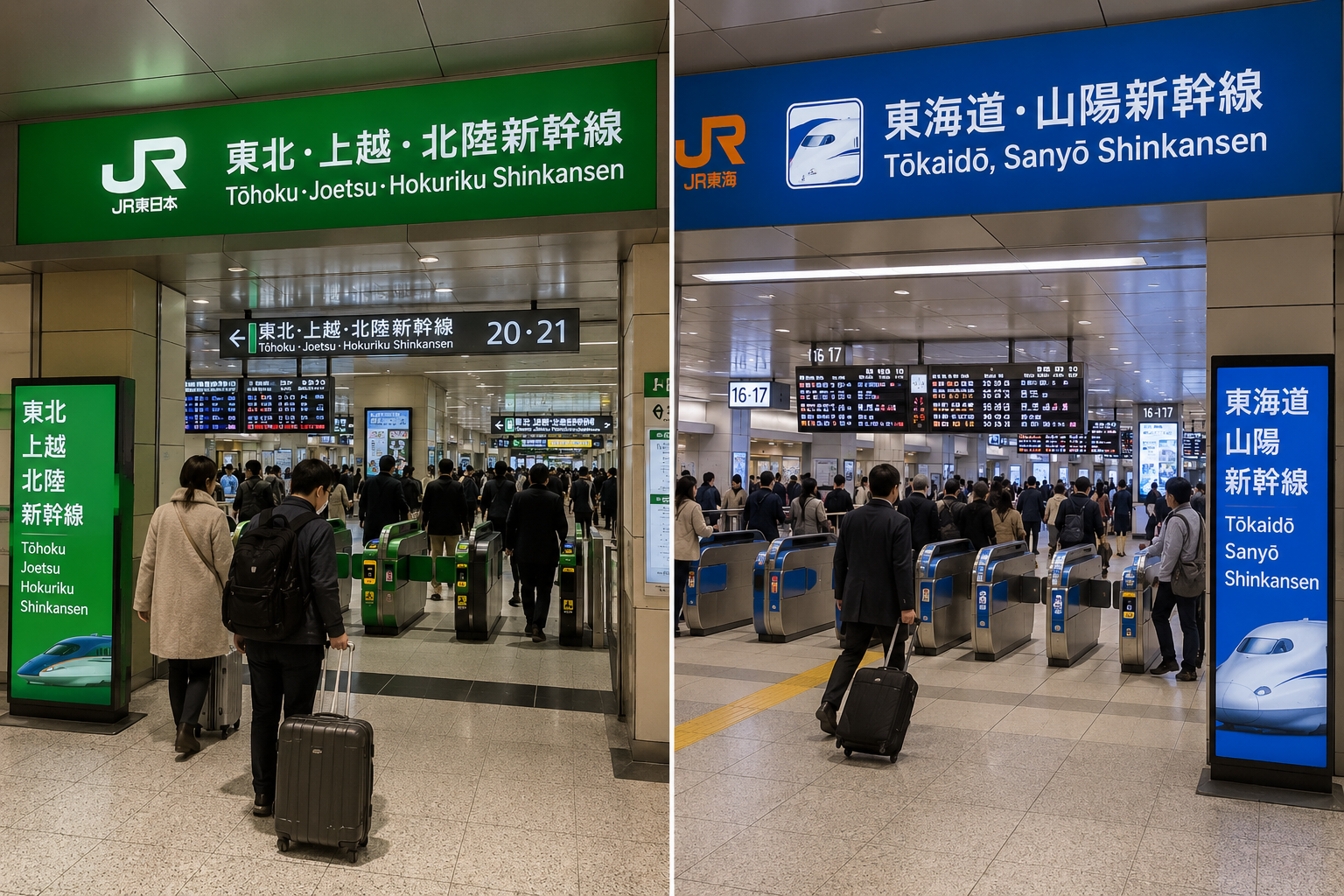
Shinkansen services from Tokyo to destinations such as Sendai, Morioka and Aomori in the Tohoku region, Nagano and Kanazawa, and Niigata are operated by JR East.
JR East’s corporate color is green. At Tokyo Station, look for signs for the Tohoku, Yamagata, Akita, Hokkaido, Joetsu and Hokuriku Shinkansen, and they will lead you toward the JR East Shinkansen ticket gates.
On the other hand, the Tokaido Shinkansen, which travels from Tokyo toward Nagoya, Kyoto and Shin-Osaka, is operated by JR Central. JR Central’s corporate color is orange, but blue is widely used on Tokaido Shinkansen signs, so looking for the blue Shinkansen signs can be an easy way to find the right direction.
In other words, even though the Shinkansen trains depart from the same Tokyo Station, they are actually operated by different companies.
For example, if you are traveling from Tokyo to Sendai, you will use JR East. If you are traveling from Tokyo to Kyoto, you will use JR Central.
You might wonder, “They’re both Shinkansen trains, so why are the entrances different?” Once you know that different companies operate them, the reason makes sense.
What is even more interesting is that Tokyo Station serves as a major dividing point between these two Shinkansen networks.
Head north from Tokyo and the Shinkansen can take you to Tohoku, Hokkaido, Niigata, Nagano and Hokuriku. Head west and it can take you to Nagoya, Kyoto, Osaka and farther into western Japan.
Tokyo Station truly is a huge Shinkansen hub connecting different parts of Japan.
For international travelers, “JR” may look like the name of a single railway company. In reality, however, Japan’s JR network is divided into separate regional companies, including JR East, JR Central and JR West.
When taking the Shinkansen from Tokyo Station, first check the name of your train and its destination.
Sendai, Aomori, Niigata, Nagano or Kanazawa → JR East
Nagoya, Kyoto or Shin-Osaka → JR Central (Tokaido Shinkansen)
Simply remembering this difference can make finding your Shinkansen entrance at Tokyo Station much easier.
The next time you walk through Tokyo Station, take a closer look at the Shinkansen signs. Once you understand why the ticket gates are separated, this complicated station may suddenly start to make a lot more sense. -
Tokyo Travel Tip: What Are the Orange Ticket Gates in the Tokyo Metro?
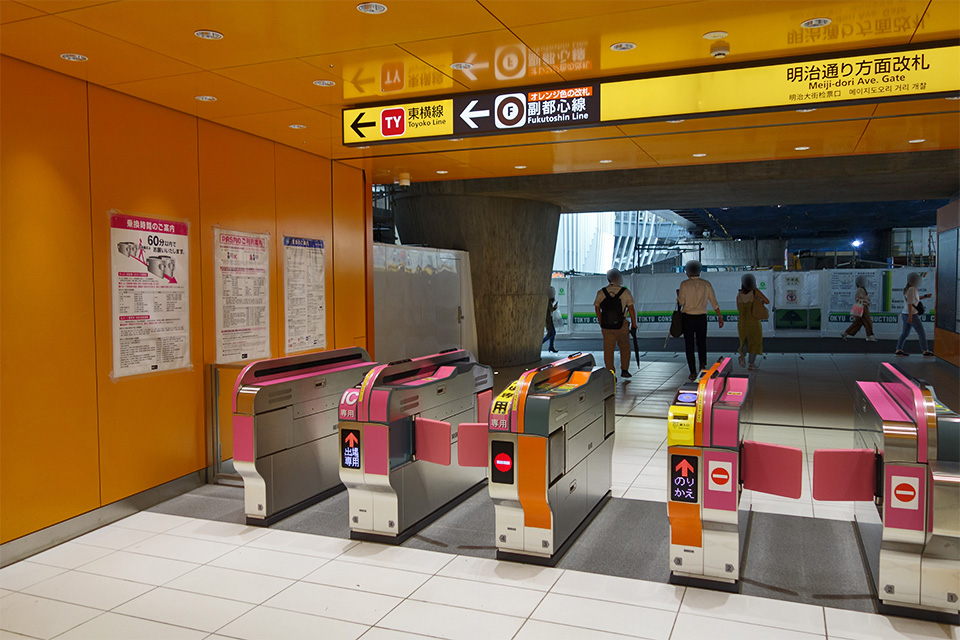
Have you ever noticed an orange ticket gate while riding the subway in Tokyo?Most ticket gates in Tokyo Metro stations look the same.But every now and then, you’ll find one that is bright orange.
Why is it orange?
Is it a special gate for tourists?
A faster exit?
A gate for emergencies?
Actually, none of these.The orange gate has a very specific purpose — and it can even save you from paying an extra fare.But before revealing the answer, let’s first understand Tokyo’s surprisingly complicated subway system.
Tokyo Has Two Different Subway Networks
Many visitors simply call everything underground “the Tokyo subway.”But there are actually two different subway operators in Tokyo.The first is Tokyo Metro, which operates 9 lines:Ginza, Marunouchi, Hibiya, Tozai, Chiyoda, Yurakucho, Hanzomon, Namboku and Fukutoshin.
The second is Toei Subway, operated by the Tokyo Metropolitan Government.
It has 4 lines:Asakusa, Mita, Shinjuku and Oedo.
That means Tokyo has 13 subway lines operated by these two systems. And then there’s JR and many other private railway companies. No wonder Tokyo’s train map can look like a bowl of colorful spaghetti!
Usually, Transfers Are Easy Let’s say you are riding the Tokyo Metro Ginza Line and want to transfer to another Tokyo Metro line.Usually, it’s simple.Just follow the transfer signs and walk to the other platform.You normally don’t need to leave the ticket gates, and you don’t have to pay another base fare just because you changed lines.But Tokyo has a problem.There are a LOT of trains running underneath the city.Different lines were constructed at different times, at different depths and in different locations.Sometimes two Tokyo Metro lines connect at the same station, but their platforms are separated in such a way that passengers actually have to leave the ticket gates, walk through the station, and enter through another gate. And that creates an interesting problem.
If You Leave the Station… Is Your Journey Over?
Normally, passing through an exit gate means:“Thank you. Your journey is finished.”So what happens when you need to leave the gates simply to transfer to another Tokyo Metro line?Do you have to pay another fare?This is exactly why those mysterious orange ticket gates exist.
The Secret of the Orange Ticket Gate
If you are traveling with a paper ticket and need to leave the ticketed area to transfer between designated Tokyo Metro lines, look for the orange ticket gate. Exit through the orange gate and complete your transfer within 60 minutes.Tokyo Metro will recognize that you are transferring rather than ending your journey. That means you won’t have to pay another base fare just because you had to leave the ticketed area.So the orange gate basically means:“I’m not leaving — I’m transferring!”Pretty clever, right?
But What If You Use Suica or PASMO?
Here’s the good news.If you are using an IC card such as Suica or PASMO, you don’t need to worry about finding the orange gate.You can use the regular ticket gates.As long as you complete the designated transfer within the allowed time, the system can recognize your transfer automatically.So if you’re visiting Tokyo and using an IC card, things are much easier.
Tokyo Metro + Toei Subway: Another Useful Trick
There’s one more thing worth knowing.Tokyo Metro and Toei Subway are different operators, so transferring between them works differently from transferring between two Tokyo Metro lines.However, if you transfer between Tokyo Metro and Toei Subway within 60 minutes, you can receive a ¥70 transfer discount on eligible journeys.It’s a small saving, but if you ride Tokyo’s subway frequently, it’s useful to know.
Next Time, Look for the Orange Gate!
Tokyo’s railway system can seem incredibly complicated when you first arrive. But once you understand a few small rules, it becomes surprisingly convenient. And now you know one of Tokyo Metro’s little secrets.Next time you’re walking through a Tokyo Metro station, take a look at the ticket gates.If you spot an orange one, you’ll know exactly what it means.Most tourists walk straight past without ever knowing why it’s there.Now you do.Welcome to Tokyo! -
Tokyo Travel Tip: Discover Tokyo Like a Local: The Best ¥210 Bus Ride in the City
Although millions of international visitors come to Tokyo, surprisingly few ever ride the city's local buses. In fact, taking a bus is one of the best and most affordable ways to explore Tokyo. From the bus window, you can enjoy the scenery of neighborhoods where local Japanese people live and experience a side of the city that most tourists never see.
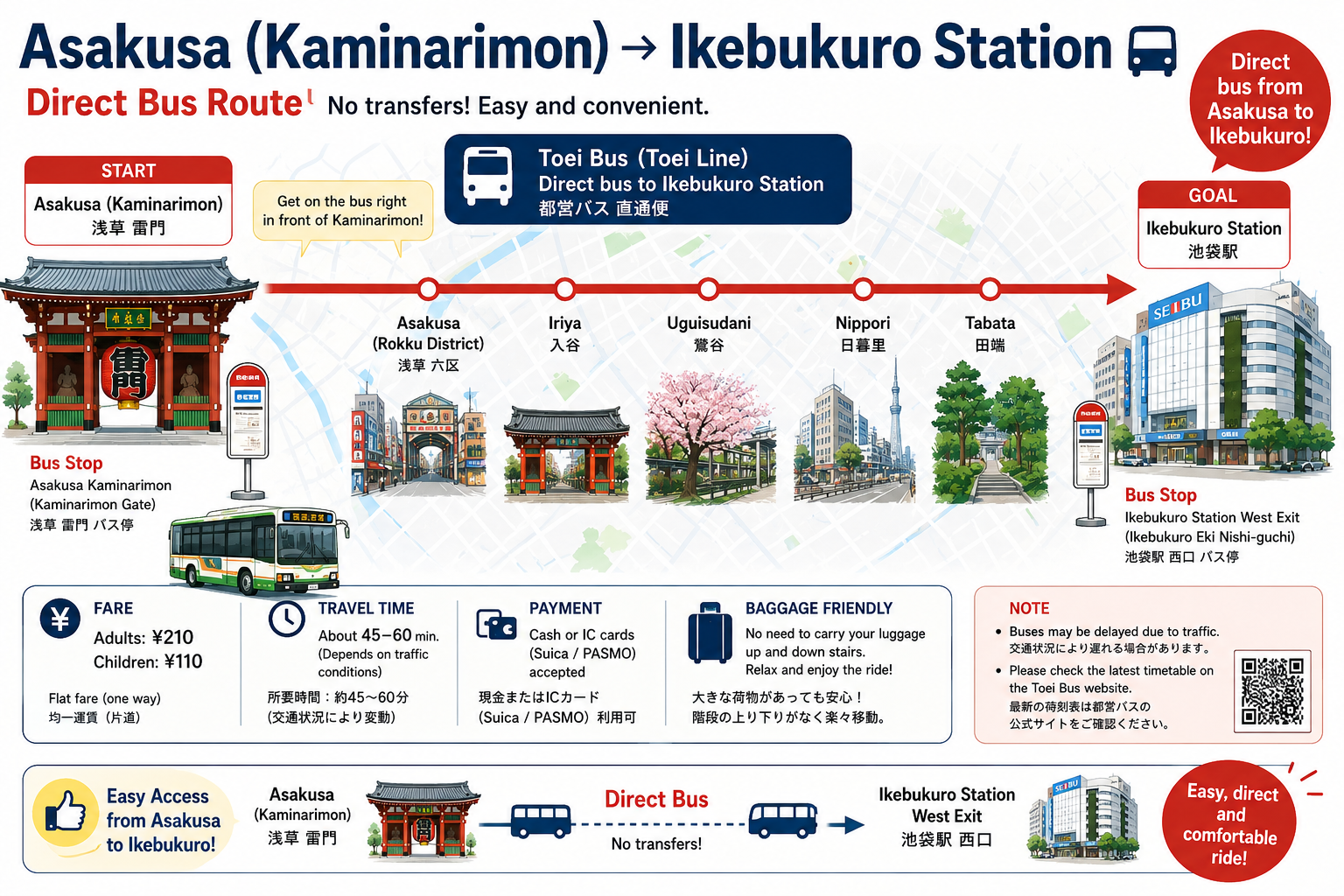
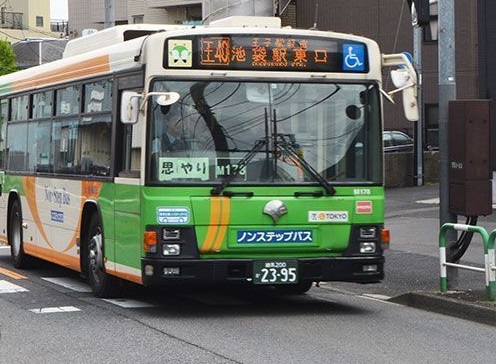
Tokyo has several bus operators, including Toei Bus, Tokyu Bus, Odakyu Bus, and Keio Bus. The largest and most widely used network is Toei Bus, operated by the Tokyo Metropolitan Government. These buses are easy to recognize by their distinctive green color.
One of the best things about Toei Bus is its flat fare. As long as you don't transfer to another bus, you can ride all the way to the final stop for just ¥210 for adults and ¥110 for children. Since these buses are mainly used by local residents for their daily lives rather than sightseeing, please keep your voice down and be considerate of other passengers.
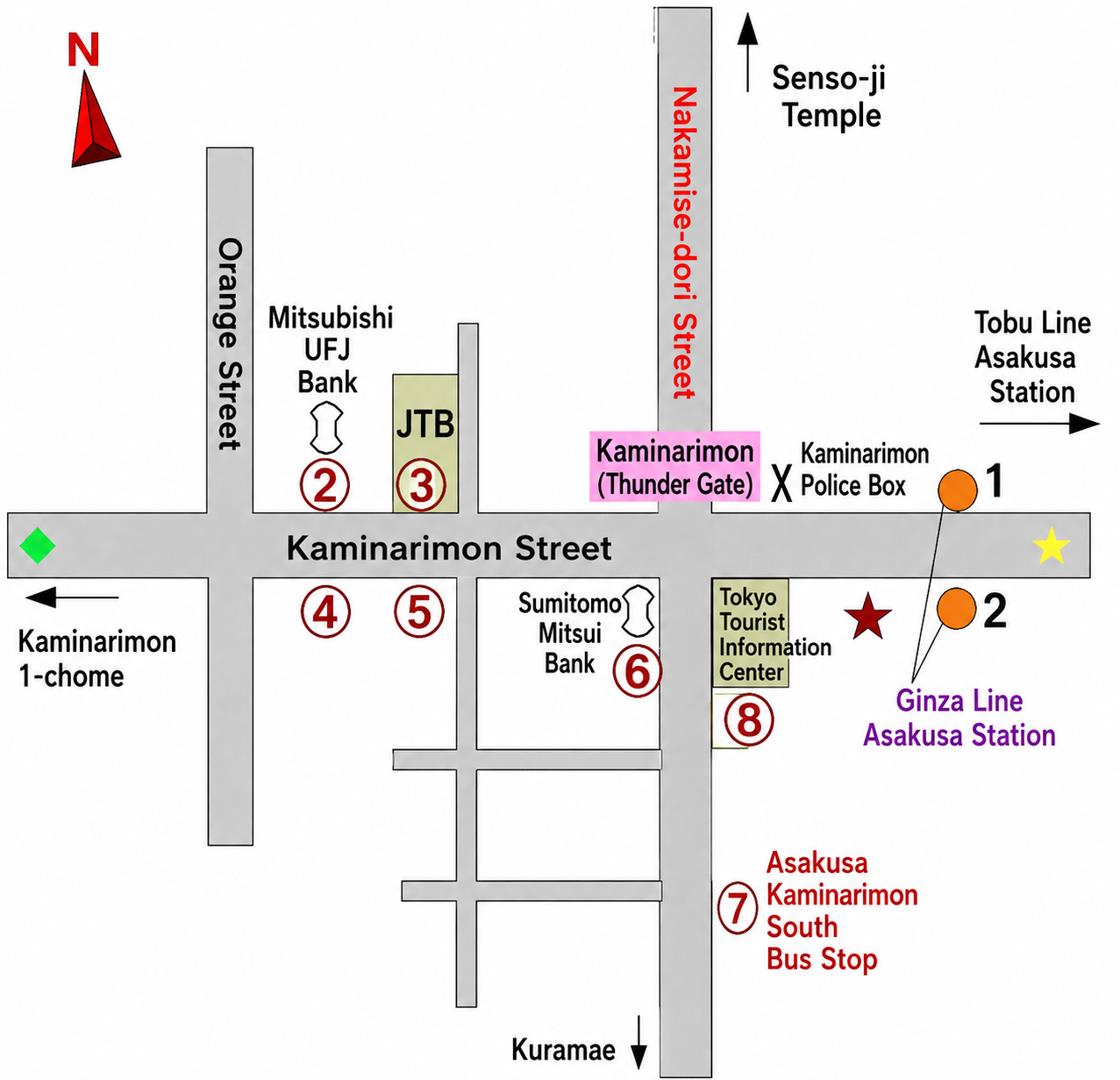
My favorite bus route starts after visiting Asakusa. Take a Toei Bus from Kaminarimon (Thunder Gate) in Asakusa to Ikebukuro Station East Exit, crossing Tokyo from east to west. The journey takes about 60 minutes and costs only ¥210.
Along the way, the bus passes through Tokyo's traditional downtown neighborhoods, giving you a chance to see parts of the city that most tourists never experience. Board the bus at Asakusa Kaminarimon Minami (Bus Stop No. 7 on the map).Buses depart approximately every 15 minutes.
When boarding, simply pay the fare using your Suica card or ¥210 in cash. If you pay with cash, it's a good idea to have the exact amount ready, as receiving change can take a little extra time.
Sit back, relax, and enjoy the view from the bus window. If you can get a seat, it's also a perfect opportunity to rest your feet while continuing your sightseeing adventure in Tokyo. -
7 Japanese Train Etiquette Tips Every Tourist Should Know
① Let Passengers Get Off First
When the train arrives, always let passengers get off before you board.
② Line Up to Board
At most stations, there are markings on the platform showing where to line up. Please wait your turn and board in an orderly manner.
③ Keep Your Voice Down
Japanese trains are generally quiet. Speaking softly helps make the ride more comfortable for everyone.
④ Avoid Talking on the Phone
Phone calls are considered impolite on most trains. If you need to make a call, it's better to do so after getting off the train or in a designated area.
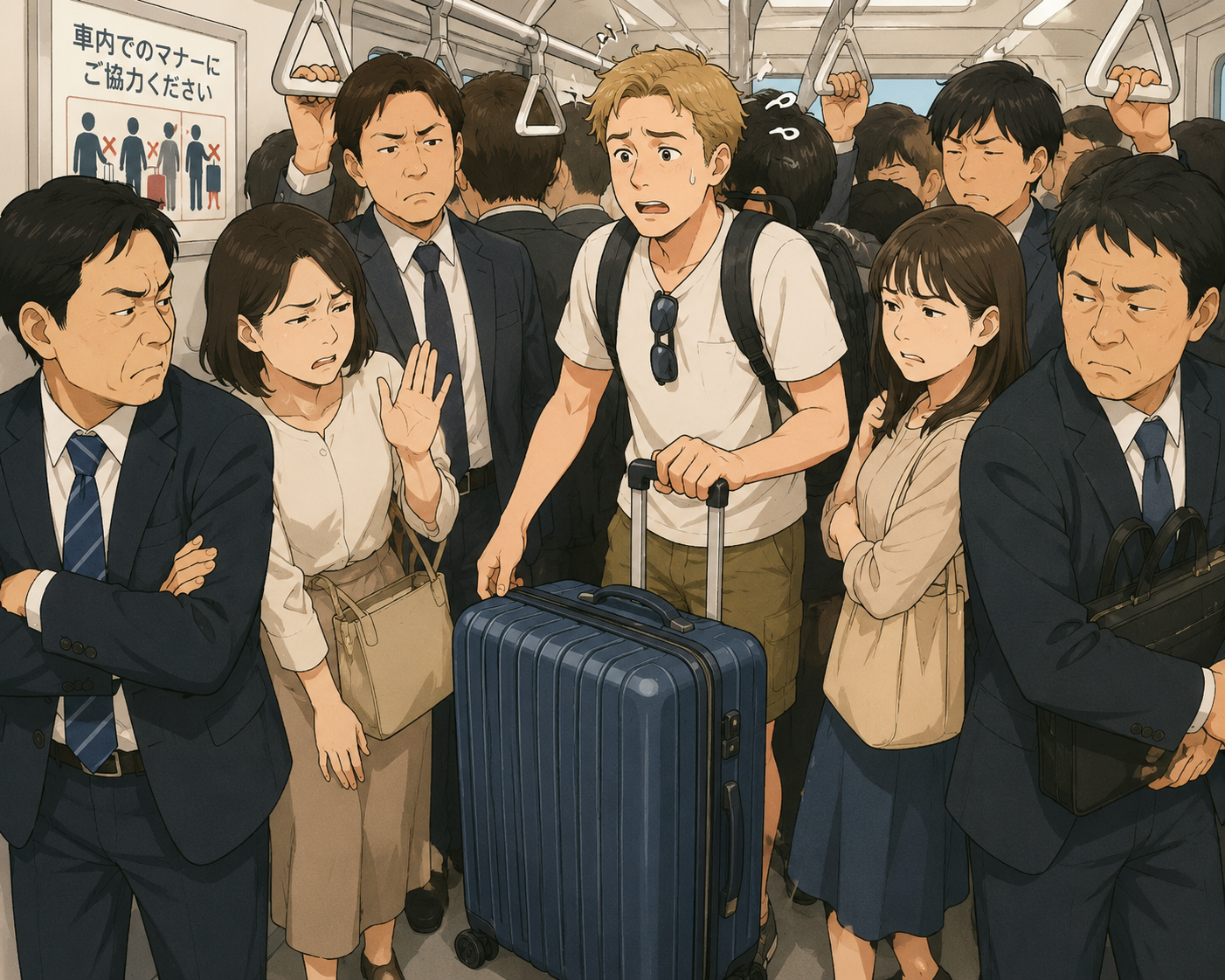
⑤ Wear Your Backpack on the Front
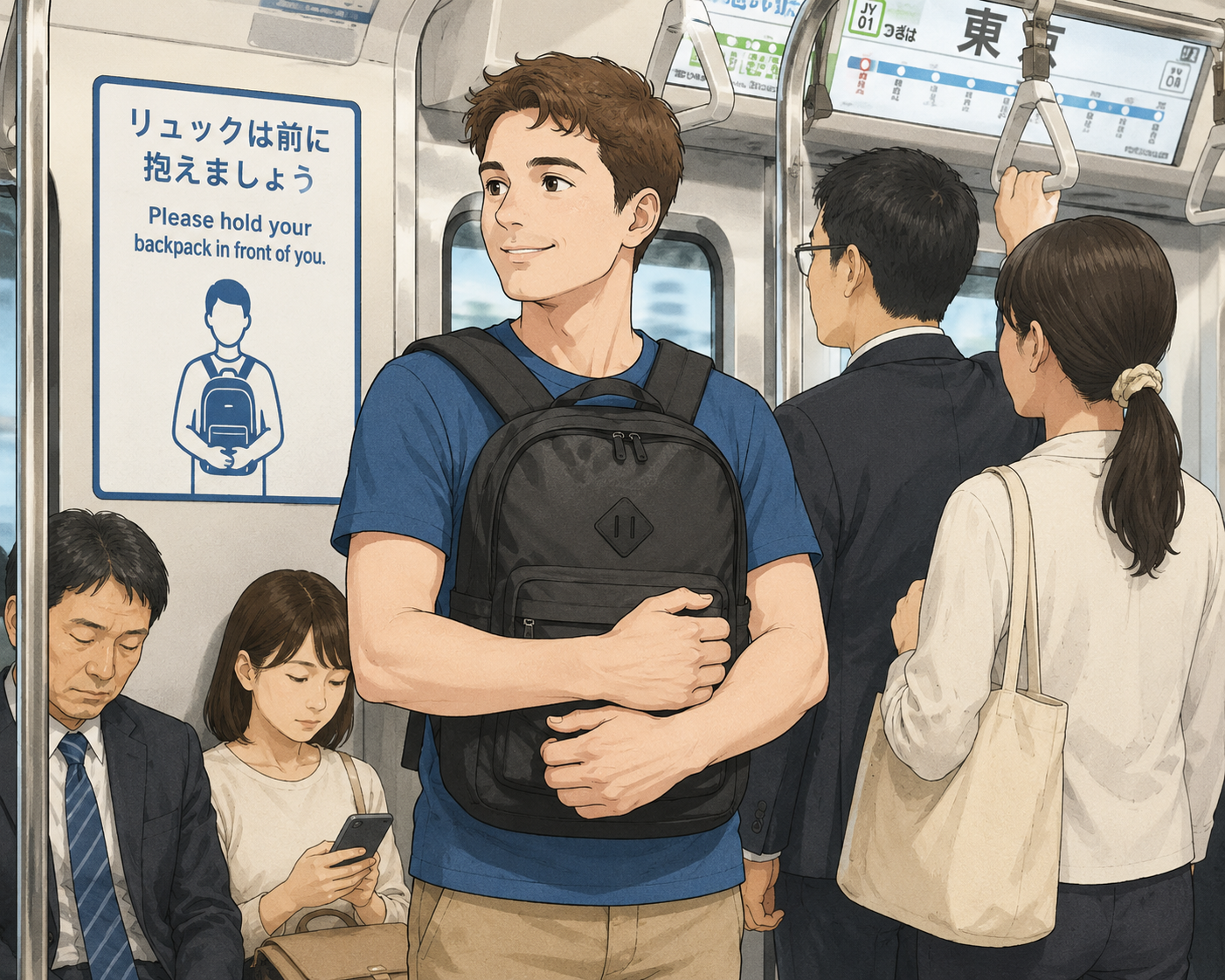
On crowded trains, carrying your backpack on your front helps prevent bumping into other passengers and creates more space.
⑥ Respect Priority Seats
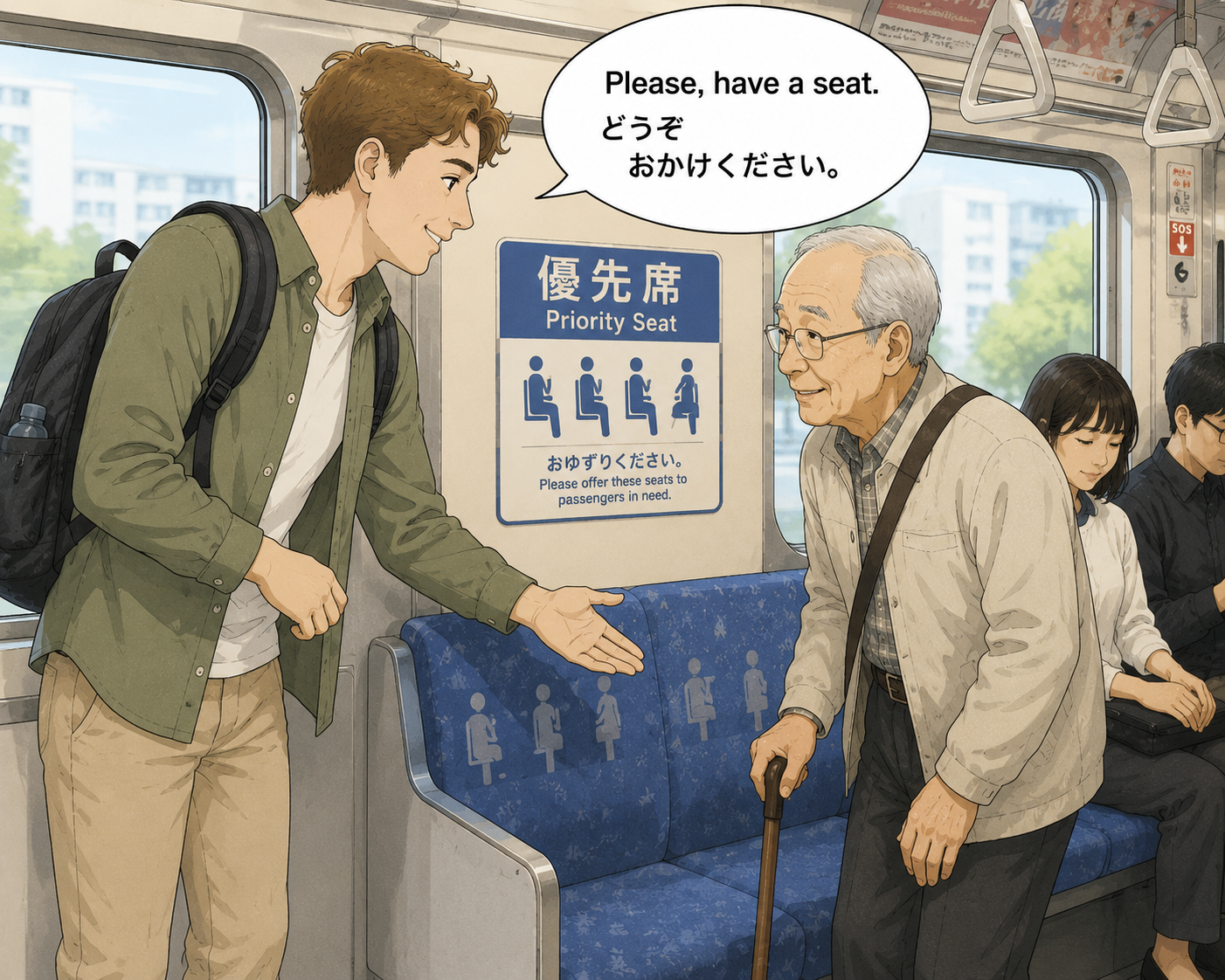
You may sit in a priority seat if it is available. However, if an elderly person, a pregnant woman, or someone with a disability boards the train, please offer your seat to them. Unfortunately, it has become a common issue in Japan that some younger passengers remain seated while elderly people have to stand in front of the priority seats.
⑦ Eating and Drinking
Eating is generally discouraged on commuter trains. Drinking water or other beverages is perfectly fine, but drinking alcohol is not appropriate. On long-distance trains such as the Shinkansen and limited express trains, however, many people enjoy eating a bento (boxed meal) during their journey. -
Surviving Japan's Summer
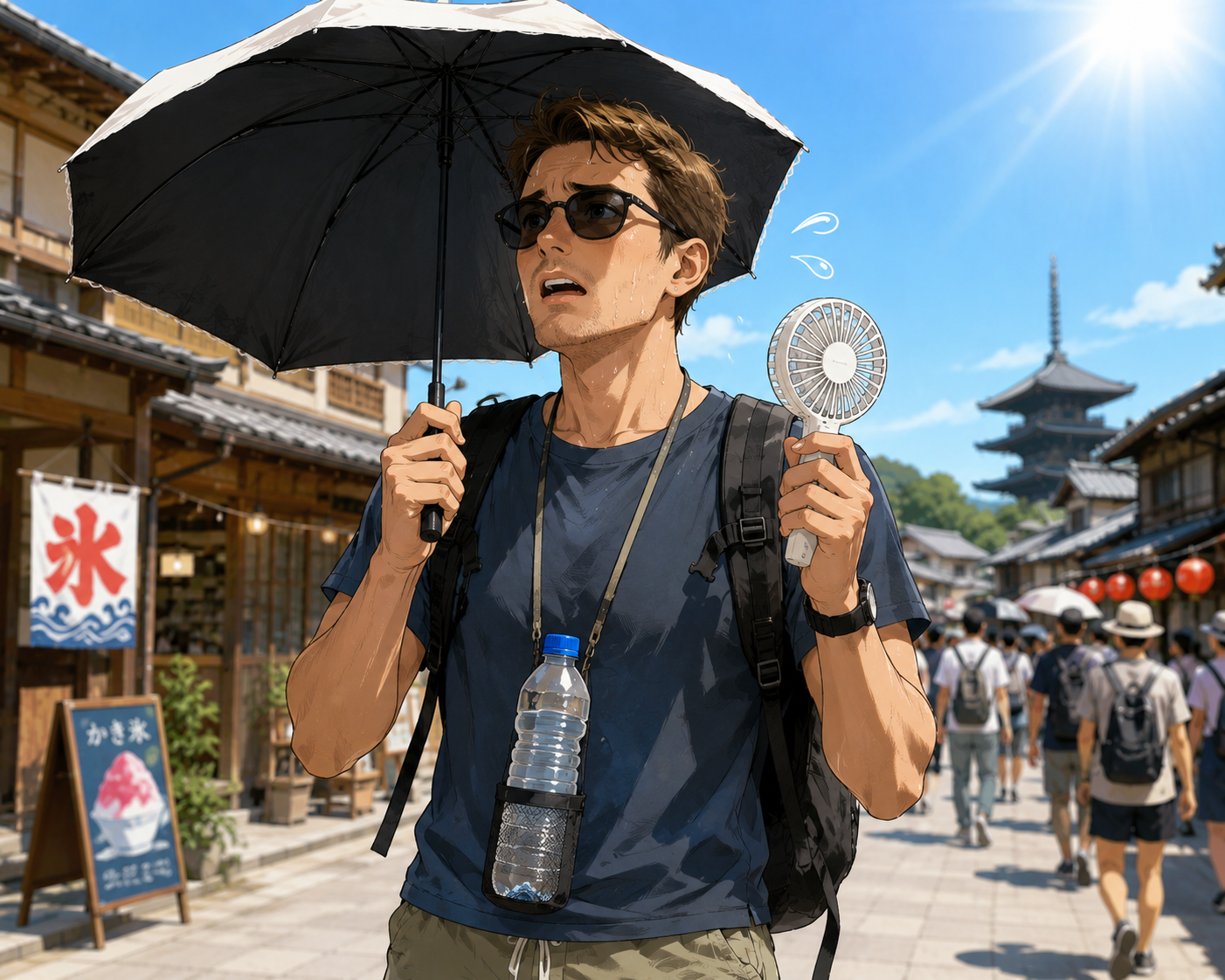
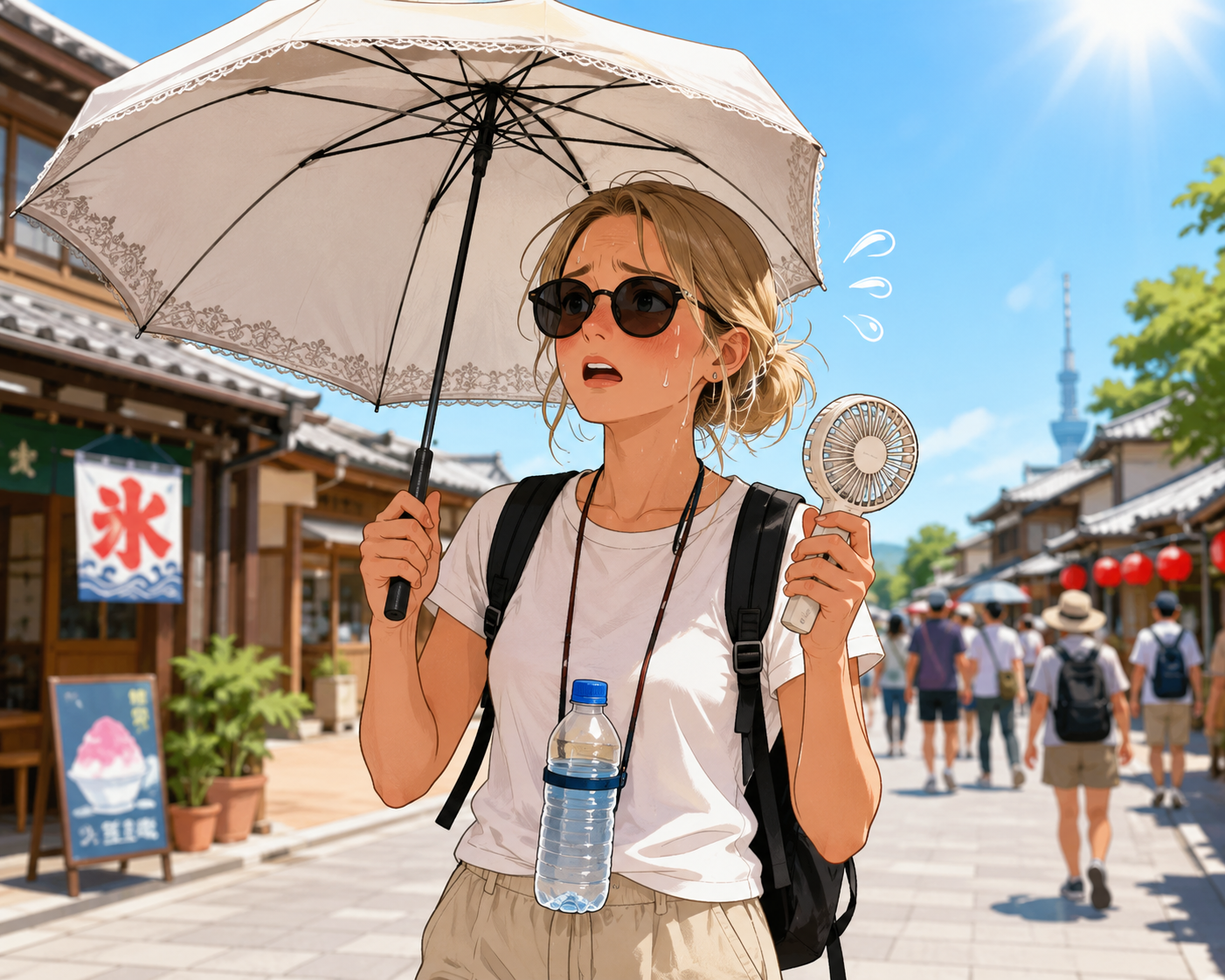
Japan's summer (July through September) is really hot. Temperatures often exceed 35°C (95°F), and the humidity is extremely high. To be honest, sightseeing outdoors during the hottest part of the day can be unbearable. I'm Japanese, and even I find it difficult.
If you have flexibility in planning your trip, I actually recommend avoiding Japan during the summer months.
That said, summer in Japan also has its own unique charm. As the evening becomes cooler, you can enjoy beautiful fireworks festivals (hanabi), lively summer festivals (matsuri), and many other traditional cultural events that are only held during this season.
If you do visit Japan in the summer, here are some important tips:
1. Prevent Heatstroke
Every summer, many Japanese people suffer from heatstroke, and some require emergency medical treatment. Staying safe from the heat is essential.
The most important thing is to drink water frequently. Sports drinks sold at convenience stores are a great choice because they help replace both water and electrolytes.
2. Carry a Small Bottle with Ice
One of my favorite recommendations is to buy a small insulated bottle from a 100-yen shop, fill it with ice, and carry it with you. Having ice-cold water available throughout the day makes a huge difference.
3. Use a Handy Fan
Portable handheld fans are sold almost everywhere in Japan during the summer. They can make walking outside much more comfortable.
Traditionally, they were mostly used by high school girls and young women, but nowadays people of all ages use them. Don't hesitate to buy one if you're feeling the heat.
4. Buy a Sun Umbrella
You can also buy a sun umbrella (parasol) at many convenience stores.
Until a few years ago, parasols were mostly used by women, but today many Japanese men use them as well. They're surprisingly effective at blocking the strong summer sun. Even better, many parasols can also be used as regular umbrellas if it suddenly starts raining.
If carrying an umbrella isn't your style, at least bring a hat.
5. Plan Indoor Activities
Perhaps the most important tip is to spend the hottest hours indoors.
Visit museums, art galleries, department stores, shopping malls, or other air-conditioned attractions during the afternoon.
A good daily schedule is:
Go sightseeing early in the morning while it's relatively cool.
Return to your hotel around noon.
Relax and stay indoors until late afternoon.
Head back out in the evening to enjoy the city when the temperature is much more comfortable.
Following this schedule will make your summer trip to Japan much more enjoyable—and much safer. -
A suitcase during rush hour
As someone who lives in Tokyo, there is one piece of advice I always give to visitors traveling to Japan.
Avoid traveling between the airport and central Tokyo during the morning and evening rush hours. Specifically, try to avoid 7:00–10:00 AM and 5:00–8:00 PM.
During these times, Tokyo's trains are incredibly crowded with commuters. If you have a large suitcase, boarding a train can be extremely difficult, and even if you manage to get on, your luggage may inconvenience other passengers.
When booking your flights, it's a good idea to choose arrival or departure times that allow you to avoid these rush hours whenever possible.
For reference:
Haneda Airport ↔ Central Tokyo: Approximately 30 minutes by train or bus.
Narita Airport ↔ Central Tokyo: Approximately 90 minutes by train or bus.
If your flight happens to arrive or depart during Tokyo's rush hour, I recommend relaxing at the airport for a while before traveling into the city, or heading to the airport a little earlier and enjoying your time there. It can make your journey much more comfortable and stress-free.
I hope this tip helps you enjoy a smoother and more pleasant trip to Japan.
If you have any questions about traveling in Japan, please feel free to contact me. -
Why Are There So Few Trash Bins in Japan?
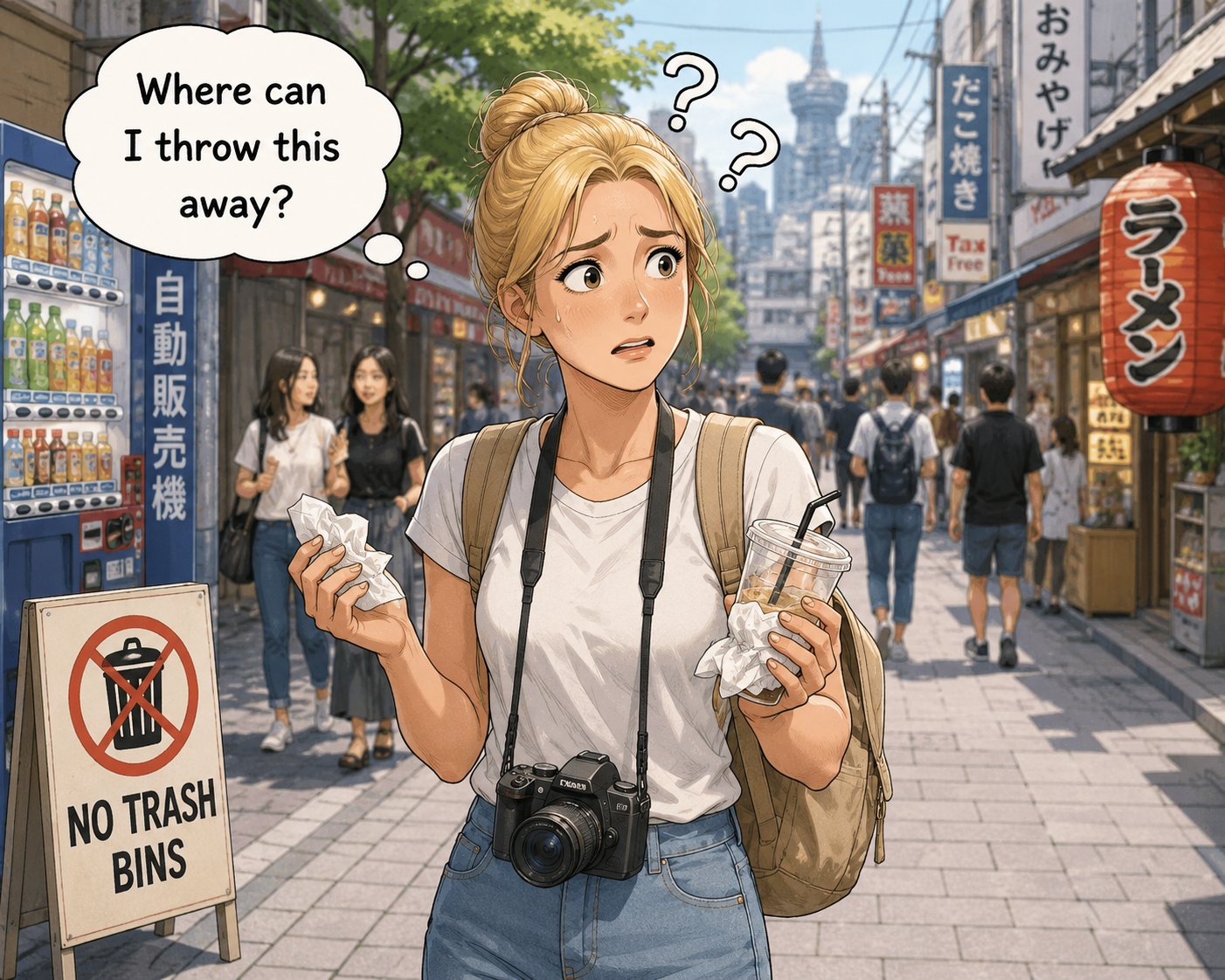
One of the things foreign visitors mention most often when traveling in Japan is, "There are no trash bins on the streets!"
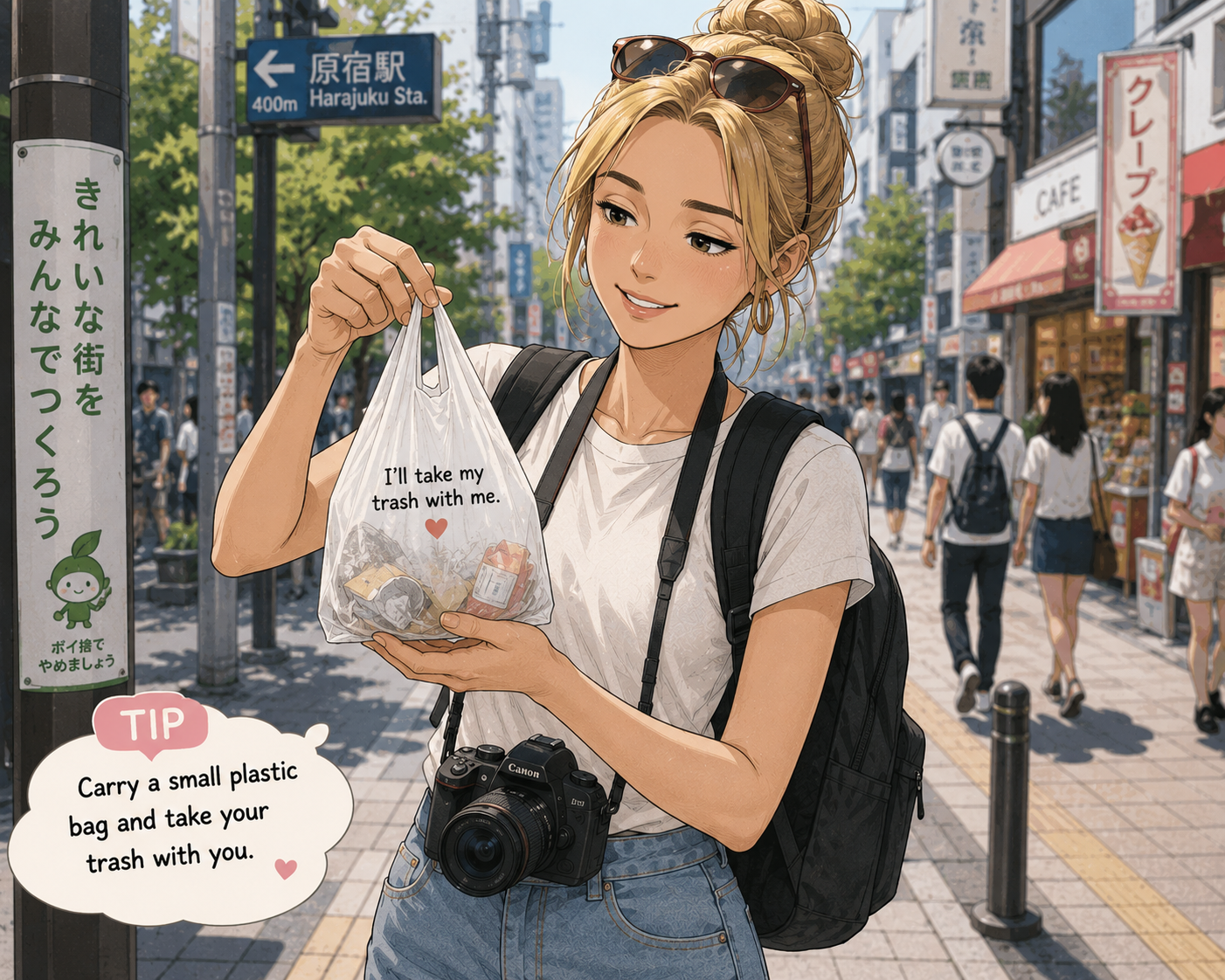
Because of this, if you buy food or drinks while sightseeing, you will usually need to keep your trash with you until you return to your hotel and throw it away there.
Japan has countless vending machines selling drinks. In the past, it was common to find recycling bins next to these machines for empty bottles and cans. However, more and more people began throwing ordinary garbage into these bins, so many of them have been removed.
One of the few places where you can still dispose of trash is inside a convenience store. Years ago, many convenience stores kept their trash bins outside the entrance. However, because people started dumping household garbage in them, many stores moved the bins indoors.
Interestingly, until a few decades ago, trash bins could be found in many public places, including streets and train stations. So, why did they disappear?
After the 1995 Tokyo subway sarin gas attack, many public trash bins were removed as part of security measures. Over time, people in Japan became accustomed to taking their own trash home, and public trash bins have remained relatively scarce ever since.
There is another reason as well. Maintaining public trash bins costs money. They must be emptied regularly, cleaned, repaired, and managed properly. By reducing the number of trash bins, railway companies, local governments, shopping centers, and other facilities have significantly lowered these maintenance costs. This may be one of the real reasons why trash bins have not returned.
Travel Tip
When visiting Japan, it's a good idea to carry a small plastic bag in your backpack or handbag. You can use it as a personal trash bag while you're out sightseeing and simply throw your garbage away in your hotel room later. It's a simple habit that will make your trip much more comfortable.